
Seeking therapy for narcissistic personality disorder (NPD) is a deeply personal decision, shaped by self-awareness, life experiences, and a willingness to change. While misconceptions about narcissism often dominate public conversations, many people experiencing narcissistic traits are actively exploring ways to better understand themselves, improve their relationships, and access professional support.
To find out what 1,604,832 opinions of people experiencing narcissism in the US were about therapy, we utilized AI-driven audience profiling to synthesize insights from online discussions over 12 months, ending on June 22nd, 2026, to a high statistical confidence level. The results reveal how they view therapy, the barriers they face, what motivates them to seek help, and why professional treatment is becoming an increasingly important part of their journey toward personal growth.
Index
- 37% of people experiencing narcissism rarely reflect on their own behavior patterns, and 36% do so occasionally; however, reflection is more frequent among others, with 14% reflecting daily and 13% reflecting weekly.
● 32% of people experiencing narcissism are not sure how they would rate their self-awareness right now, 23% rate theirs as moderate, and equal numbers of 22% each rate their self-awareness as high or low
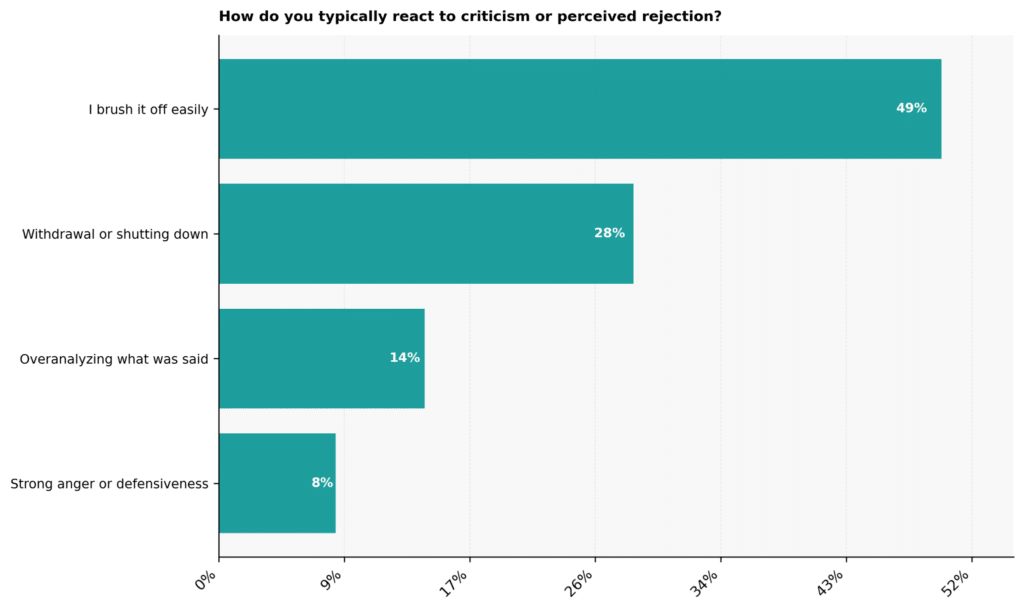
● When facing criticism or perceived rejection, 49% of people experiencing narcissism brush it off easily; however, 28% respond by withdrawing or shutting down, 14% overanalyze what was said, and 8% react with strong anger or defensiveness.
● For 38% of people experiencing narcissism, the area most affected by these traits is their work or career, and another 10% are somewhat affected here, for 12%’s romantic relationships are most affected, 14% are somewhat, and 1% less so, while family relationships are the most affected for 15%, and somewhat affected for 5%, and friendships and social life takes the biggest knock for 2%.
● 59% of people experiencing narcissism have difficulty maintaining long-term relationships, 16% have relationships that feel mostly stable but are strained, and 16% haven’t noticed a significant impact on their closest relationships yet, but 9% have frequent conflict or breakups.
● 20% of people experiencing narcissism have absolutely experienced minor consequences tied to these traits, and 13% have somewhat, 7% have faced significant consequences as a result, and 10% have somewhat, while 31% have not yet, but are worried they might, and 19% have not had any noticeable consequences so far. - 8% of people experiencing narcissism absolutely believe that change is possible for their traits, 18% think it’s somewhat possible to change, and just 4% think it’s unlikely, 7% somewhat believe change is absolutely possible, 21% think it’s somewhat possible, and 3% unlikely, while 7% overall are doubtful about change, and 30% are unsure.
- 15% of people experiencing narcissism are being pushed by someone else to attend therapy, making this their possible goal; however, 47% are not really sure their goal is to please someone else, and 1% agree this is not their goal at all, 13% have the main goal of better understanding themselves and 8% think this is possibly their goal, 6% are prioritizing improving their relationships, and 5% cite this as a possibly therapy goal, while 2% share the same sentiment about addressing a specific crisis.
- 36% of people experiencing narcissism are uncomfortable discussing these traits with a therapist, but are willing to try, while equal numbers of 21% each are very uncomfortable, somewhat comfortable, and very comfortable.
- Not believing therapy will help is not much of a barrier for seeking it for 66% of people experiencing narcissism; it’s not a barrier at all for 3%, and just 8% agree it is somewhat so. 2% feel the same about not knowing where to start, and a larger 17% say this isn’t much of a barrier, while 2% don’t have much concern about being judged or labeled, and no one is discussing the cost of insurance coverage as a hindrance.
- For 68% of people experiencing narcissism, the biggest fear about starting therapy is that it won’t work for them, yet 22% are not really concerned about this, and 1% don’t fear this at all; the remaining 7% have very real concerns about being judged or labeled.
- 12% of people experiencing narcissism are most interested in CBT, and 23% think it’s worth considering, but it’s not a first choice for 17%, and 11% are not interested in this type of therapy, while psychodynamic therapy is not a first choice for a further 1%, and 34% are not sure or are open to recommendations.
- 36% of people experiencing narcissism lean towards both couples and individual therapy; this doubling up is absolutely the top preference for 3%, but not a first choice for 7%, 2% lean towards couples only therapy, but it’s not the first pick for another 2%, and 48% are unsure of their preferences.
- 89% of people experiencing narcissism are not really interested in in-person only therapy, and just 3% are somewhat, while 4% are not really interested in virtual therapy, and 2% are unsure about whether they would be interested in virtual therapy sessions.
- Privacy in choosing a therapist may be somewhat important to 51% of people experiencing narcissism and extremely important to 1%, but it’s not a major concern for 47%, and 1% haven’t thought about it.
- A clear, judgement-free communication style would help 56% of people experiencing narcissism trust a therapist specializing in this disorder, 2% think this is absolutely essential for building trust, but it’s not a big factor for 22%, and it doesn’t matter to 5%, while specialized credentials or experience are absolutely essential for 4%, would help 6% trust a therapist, and are not a big factor for the remaining 6%.
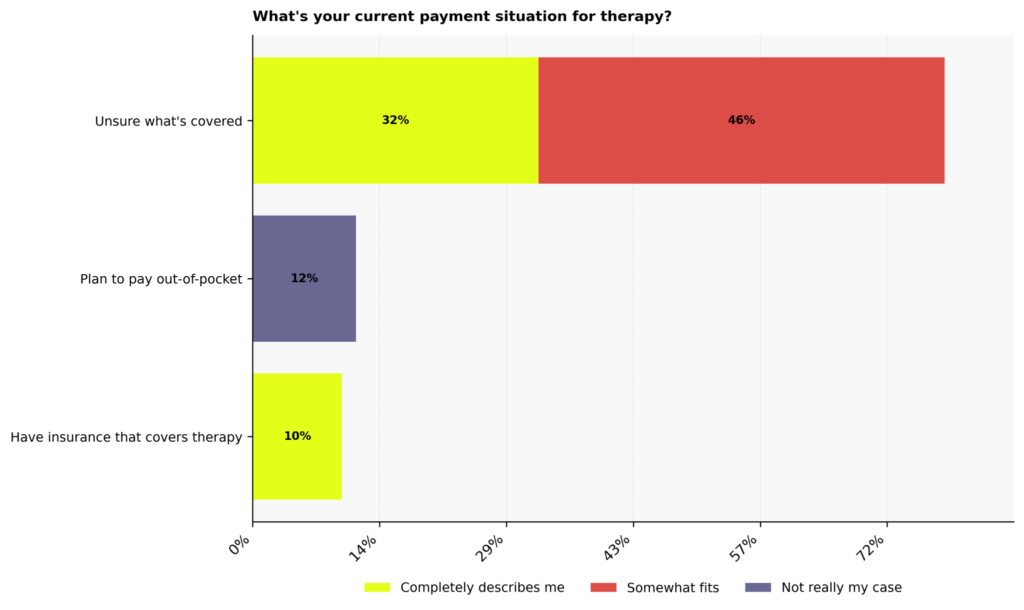
- 32% of people experiencing narcissism are unsure of what is covered by their insurance for therapy, and 46% somewhat fit into this category too, 10% have insurance that covers their therapy, and 12% don’t really have to pay out of pocket for sessions.
- 4% of people experiencing narcissism have tried using AI chatbots to explore these traits a few times, 1% have done so regularly, but 5% are curious but hesitant in this regard, while 26% have tried it but prefer human support, and 2% absolutely agree with this, and 64% have not tried it but are curious, but 6% already know it’s not for them.
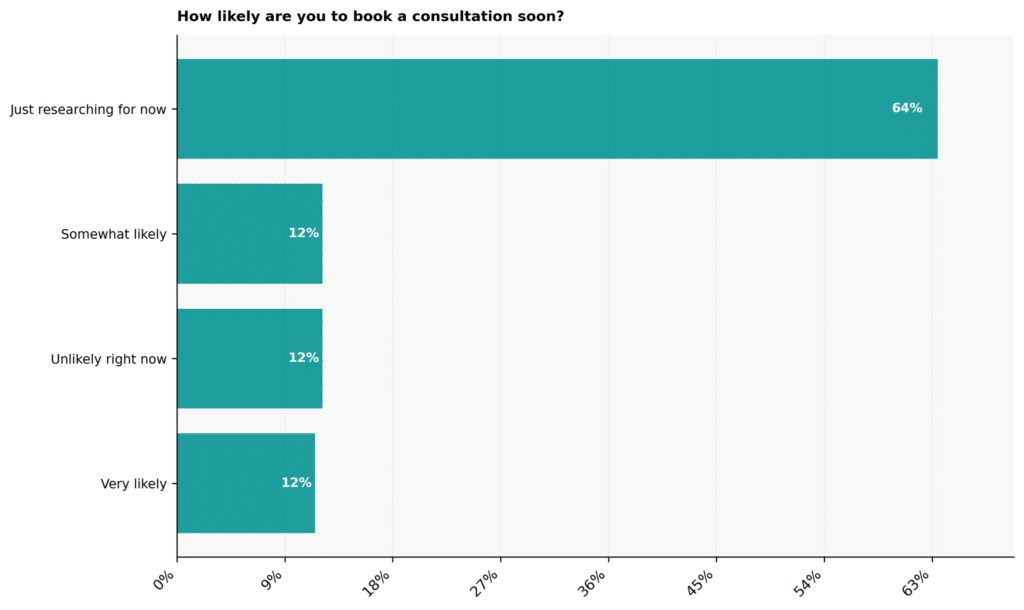
- 64% of people experiencing narcissism are just searching for a therapist for now and are not about to book a consultation; 12% are unlikely to book a session soon, but 12% are somewhat likely, and another 12% are very likely to do so.
- A positive outlook for therapy and personal growth.
- About the data.
How often do people experiencing narcissism reflect on their behavior
patterns?
37% of people experiencing narcissism rarely reflect on their own behavior patterns, and 36% do so occasionally; however, reflection is more frequent among others, with 14% reflecting daily and 13% reflecting weekly.
Reflection is not always a regular occurrence:
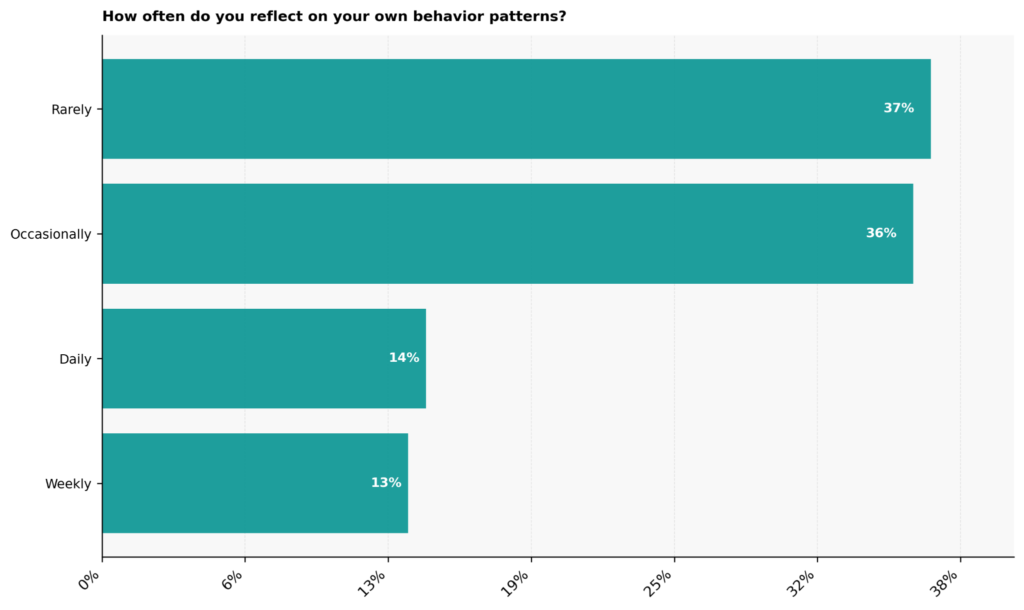
How often people experiencing narcissism consider their behavior varies considerably, but regular introspection is far from the norm for most of our audience. The biggest segment, at 37%, rarely reflects on their behavior patterns, followed by the 36% who do so only from time to time. As these two categories account for 73%, regular self-examination is clearly not common practice.
Just 14% reflect on their behavior daily, while 13% do so weekly. This means that, combined, only 27% of people experiencing narcissism engage in self-reflection at least once a week, highlighting a clear imbalance between habitual and more infrequent introspection.
This is striking because self-awareness is so widely regarded as a key component of well-being. According to Harvard, it’s estimated that narcissistic personality disorder (NPD) may affect as many as one in 20 Americans, reinforcing the importance of developing a greater awareness of behavior patterns.
How would people experiencing narcissism rate their self-awareness?
32% of people experiencing narcissism are not sure how they would rate their self-awareness right now, 23% rate theirs as moderate, and equal numbers of 22% each rate their self-awareness as high or low.
Self-awareness levels fluctuate:
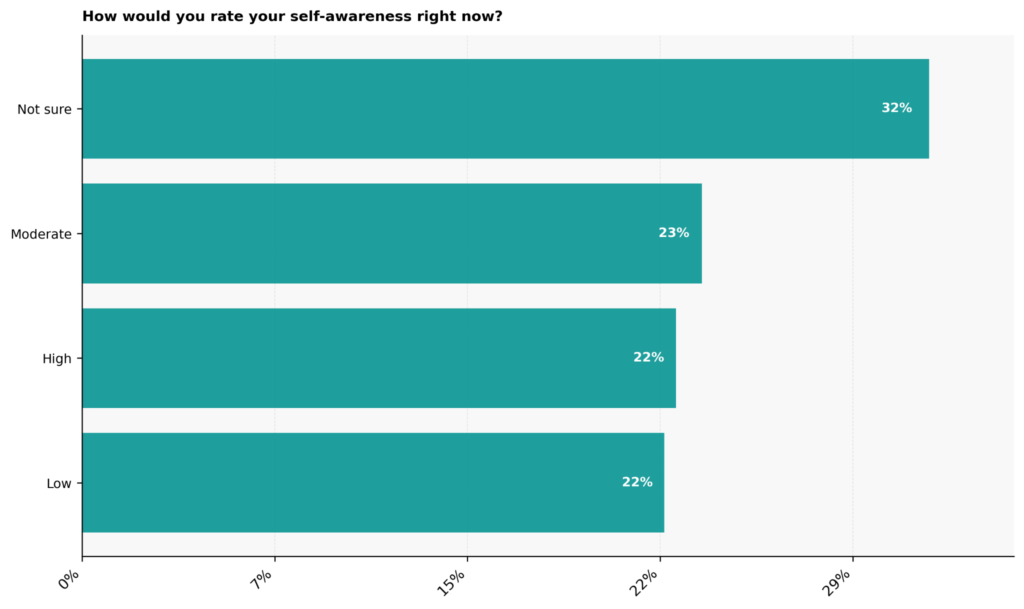
Self-awareness is critical when trying to recognize and deal with unhealthy personality traits, but people experiencing narcissism reveal that many find it challenging to judge themselves objectively. 32% aren’t sure how they’d rate their self-awareness right now, making uncertainty the most common sentiment. Another 23% describe their level of self-awareness as moderate, while 22% believe it’s high, and an equal number rate it as low.
The almost identical split between high and low self-ratings, combined with the large percentage of people experiencing narcissism who are unsure, shows that most aren’t very confident about self-assessment abilities. This is particularly relevant when it comes to covert narcissism. A defining characteristic of the latter is a distorted view of the self. Some can recognize that others have criticized or labeled their behavior as narcissistic while still rejecting personal responsibility for it.
Genuine self-awareness requires honest self-reflection, accountability, and a willingness to change, making objective self-assessment far more difficult than many people realize.
How do people experiencing narcissism react to criticism or perceived rejection?
When facing criticism or perceived rejection, 49% of people experiencing narcissism brush it off easily; however, 28% respond by withdrawing or shutting down, 14% overanalyze what was said, and 8% react with strong anger or defensiveness.
Strong reactions tip the scales:
People experiencing narcissism who can’t quite assess themselves objectively are also more likely to misinterpret perceived disapproval or rejection. Criticism can feel like a direct attack on a narcissist’s self-worth rather than constructive feedback, and this perceived threat, known as “narcissistic injury,” can trigger rage and other defensive behaviors.
Almost half of people experiencing narcissism (49%) in our audience say they brush negative feedback or perceived rejection off easily. 28% withdraw or shut down emotionally, internalizing the criticism rather than confronting it directly, and another 14% overanalyze what was said to them, a practice that can reinforce feelings of shame, self-doubt, or rejection. 8% of our audience habitually responds with strong anger or defensiveness, two reactions very commonly associated with narcissistic rage.
This shows that the reactions of people with NPD exist on a spectrum, with some people externalizing their responses while others do the opposite.
Which life area is most affected by narcissistic traits for people experiencing them?
For 38% of people experiencing narcissism, the area most affected by these traits is their work or career, and another 10% are somewhat affected here, 12%’s romantic relationships are most affected, 14% are somewhat, and 1% less so, while family relationships are the most affected for 15%, and somewhat affected for 5%, and friendships and social life takes the biggest knock for 2%
NPD has a ripple effect:
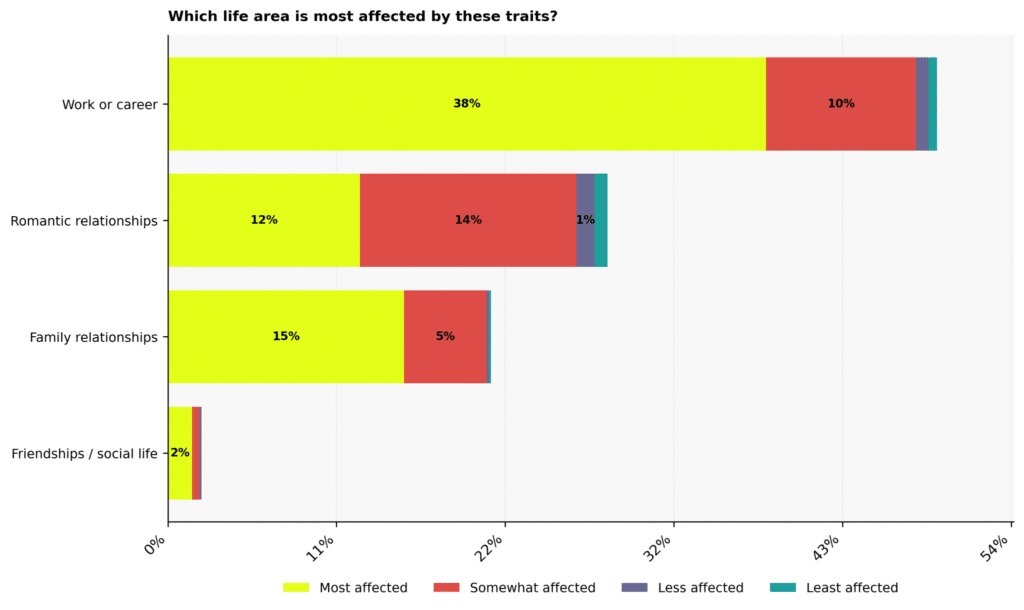
People experiencing NPD perceive narcissistic traits to have the greatest impact on their work or careers. Our audience shows that there is a clear gap in consequences between their professional lives and all other areas.
38% of people experiencing NPD identify their work or career as the most affected area, while 10% say it is somewhat influenced. Less than 1% of people feel this area is less or least impacted.
A total of 12% of our audience’s romantic relationships are the area most affected, while 14% describe this aspect as only somewhat so. 1% consider this part of their lives the least affected aspect, and less than 1% say it’s the least affected.
15% of people experiencing narcissism assert that their family relationships are the most impacted, and 5% are only somewhat affected. Less than 1% see this area as the less or least affected one.
The friendships and social lives of people experiencing NPD are the areas least influenced, with just 2% of our audience feeling this area was most impacted, and less than 1% confirming that this area was only somewhat or less affected.
How do narcissistic traits affect the closest relationships of people experiencing them?
59% of people experiencing narcissism have difficulty maintaining long-term relationships, 16% have relationships that feel mostly stable but are strained, and 16% haven’t noticed a significant impact on their closest relationships yet, but 9% have frequent conflict or breakups
Close relationships take strain:
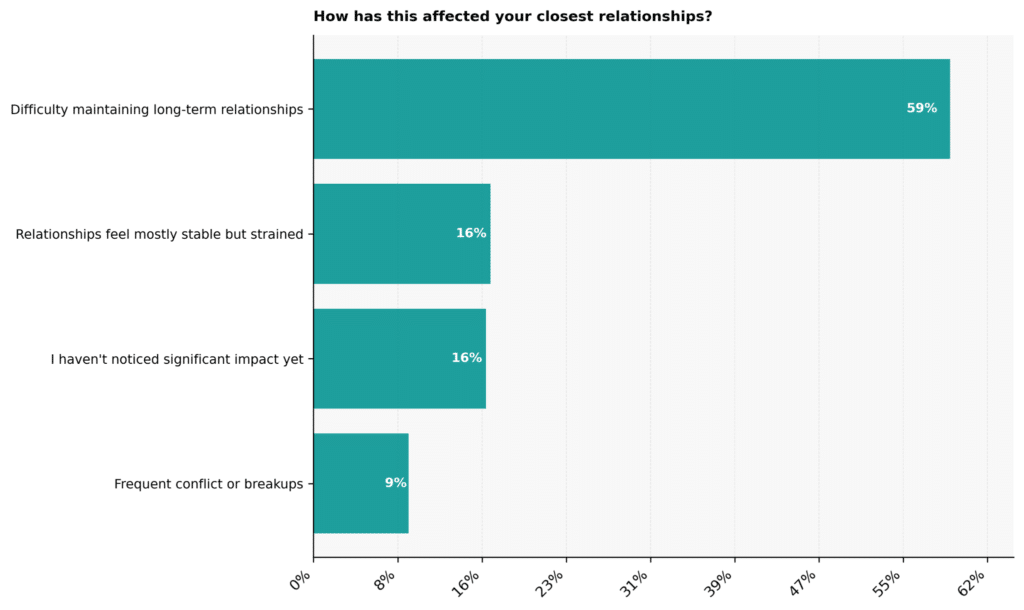
The effects of NPD on those around people experiencing it are not limited to a single relationship challenge, with our audience indicating clear differences in how difficulties play out over extended periods of time.
59% of people experiencing NPD have difficulty maintaining long-term relationships at all, and 9% report suffering through frequent bouts of conflict or complete breakups. 16% assert that, while their personal connections are stable, they feel strained, but 16% haven’t noticed any significant impact from their disorder on their relationships at all.
A study by the Journal of Personality found that narcissistic traits are associated with poorer long-term relationship outcomes, as initial charm and confidence often give way to conflict, reduced trust, and lower relationship satisfaction over time. This aligns closely with our audience, indicating that while some people with NPD are able to sustain relationships, the majority face persistent challenges that can make building and maintaining healthy, lasting connections more difficult.
Have people experiencing narcissism faced consequences tied to these traits?
20% of people experiencing narcissism have absolutely experienced minor consequences tied to these traits, and 13% have somewhat, 7% have faced significant consequences as a result, and 10% have somewhat, while 31% have not yet, but are worried they might, and 19% have not had any noticeable consequences so far.
Not all actions have consequences yet:
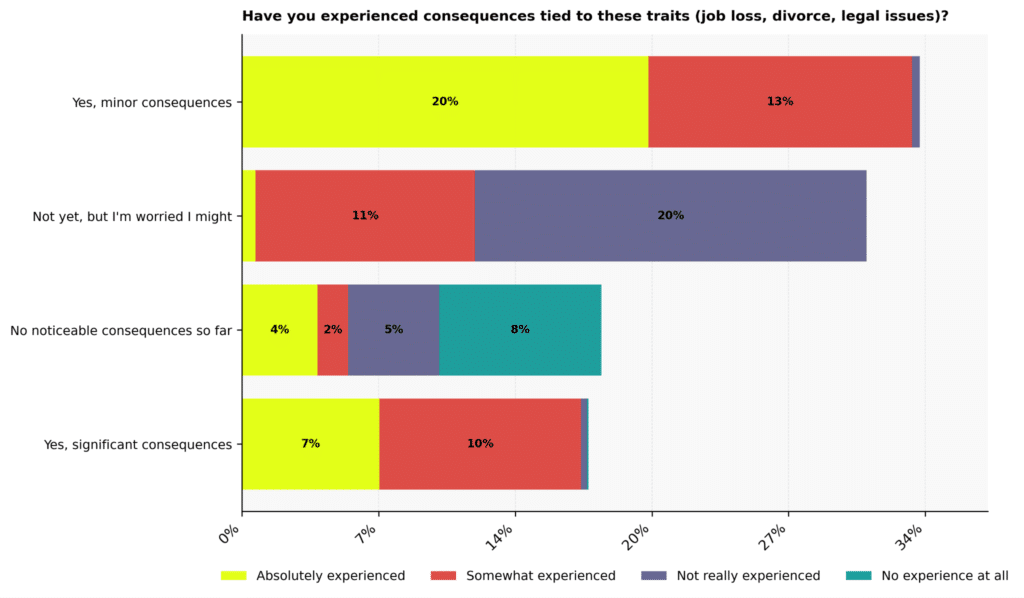
The consequences that people experiencing narcissism have to deal with in terms of job loss, relationship trouble, and legal issues vary widely. Some encounter relatively minor setbacks; others face more serious repercussions or spend time worrying about those that the future may bring.
The majority of our audience feels minor consequences, with 20% reporting that they have dealt with these kinds of aftereffects significantly, 13% to some extent, and fewer than 1% avoiding them altogether. Concern about consequences in the future is more divided. While 11% related to this concern in an absolute way, 20% indicate that it doesn’t apply to them in any measurable way. Only 1% identify with this feeling completely.
Only 4% indicate that they have definitely experienced no notable consequences so far, and another 2% relate to this statement to some extent. A further 5% feel this doesn’t really apply to them, while 8% have no experience with this at all. A total of 7% have definitely experienced significant consequences, and 10% have experienced them to some extent. Fewer than 1% indicate that this has not been the case for them at all.
The prominence of minor consequences felt by people with NPD suggests that the burdens of their narcissistic traits are accumulated more through repeated setbacks than as the result of a monumental life-changing event.
Do people experiencing narcissism believe change is possible?
8% of people experiencing narcissism absolutely believe that change is possible for their traits, 18% think it’s somewhat possible to change, and just 4% think it’s unlikely, 7% somewhat believe change is absolutely possible, 21% think it’s somewhat possible, and 3% unlikely, while 7% overall are doubtful about change, and 30% are unsure.
Change is not a given for everyone:
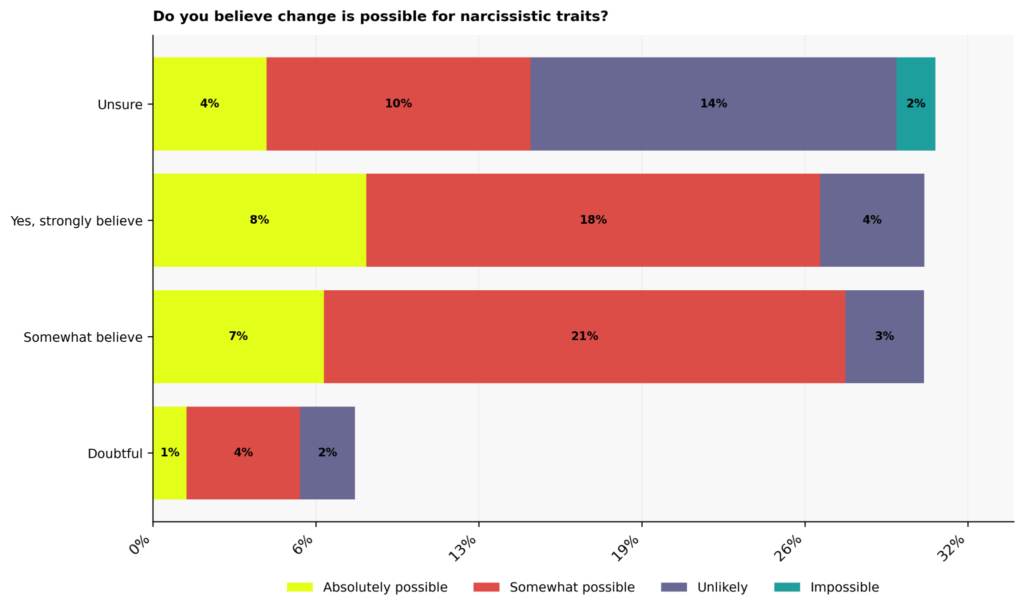
According to Medical News Today, it’s certainly possible and can happen with sustained effort and the appropriate treatment. Our audience’s outlook reflects varying levels of confidence in the eventuality. Among those who strongly believe change is possible, 8% consider it absolutely achievable and 18% regard it as somewhat possible. Only 4% view meaningful change as unlikely.
For those who hold a more moderate belief in the possibility of change, 7% consider it an absolutely achievable goal, while 21% regard it as only somewhat so. Just 3% view meaningful change as improbable. Those who remain unsure present a more divided outlook: 4% consider meaningful change absolutely achievable, and 10% regard it as somewhat possible. By comparison, 14% believe it’s unlikely, while 2% consider it impossible.
Doubt is the least common viewpoint. Only 1% think that meaningful change is absolutely achievable, while 4% regard it as somewhat possible. A further 2% view it as unlikely.
These percentages tell us that uncertainty is more prevalent than outright skepticism, indicating that people with NPD have not totally dismissed the possibility of meaningful change but remain unconvinced that it can truly be achieved.
Which best describes the therapy goal for people experiencing narcissism?
15% of people experiencing narcissism are being pushed by someone else to attend therapy, making this their possible goal; however, 47% are not really sure their goal is to please someone else, and 1% agree this is not their goal at all, 13% have the main goal of better understanding themselves and 8% think this is possibly their goal, 6% are prioritizing improving their relationships, and 5% cite this as a possibly therapy goal, while 2% share the same sentiment about addressing a specific crisis.
Therapy goals hit differently:
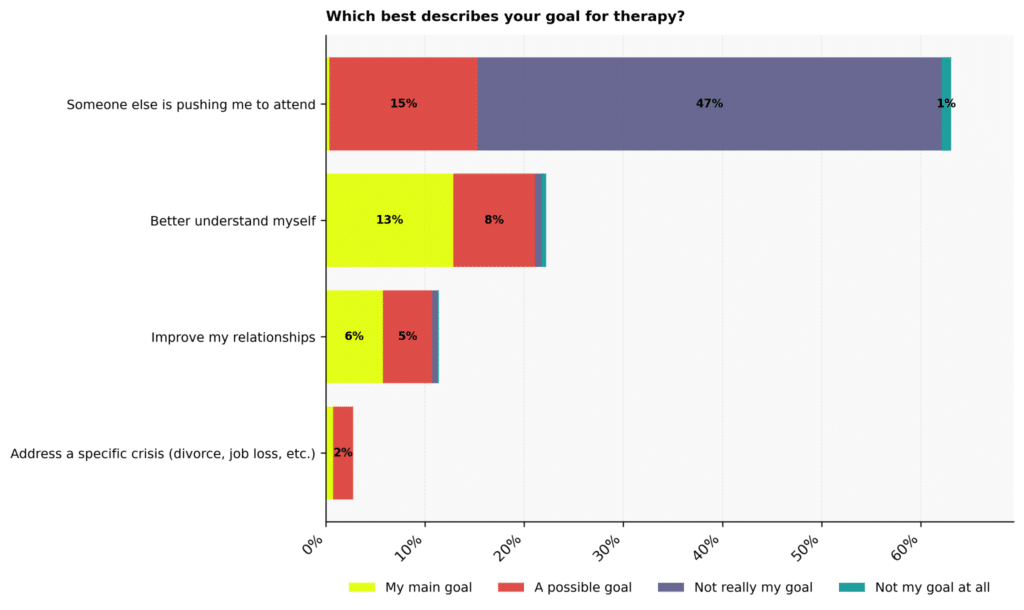
The goals in therapy for people experiencing narcissism have a huge impact on how they’ll engage in treatment as well as what they hope to achieve. Amongst our audience, 15% are being pushed by someone else to attend, while for 47%, pressure from outside is not really motivating them, and for 1% this isn’t their goal at all.
Comparatively, there are far more people who aim to change their lives without external pressure pushing them to do so. 13% have the main goal of better understanding themselves, and this is a possible goal for 8%. 6%’s main objective is to use therapy to improve their relations, with another 5% possibly doing so, and 2% share the same sentiments about using therapy to address a specific crisis, such as a divorce or job loss.
Looking at these figures, it’s evident that for our audience, setting their own therapy goals is preferable over trying to please someone else.
How comfortable are people experiencing narcissism in discussing these traits with a therapist?
36% of people experiencing narcissism are uncomfortable discussing these traits with a therapist, but are willing to try, while equal numbers of 21% each are very uncomfortable, somewhat comfortable, and very comfortable
Discomfort is not an uncommon emotion:
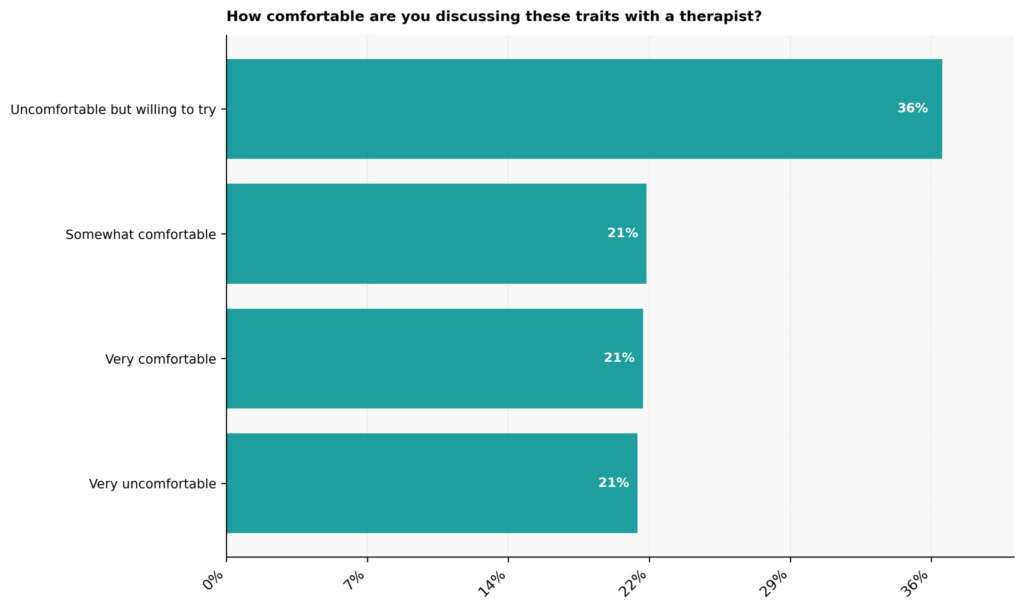
While therapy is designed to be an emotionally safe space for people to be and talk about who they really are, it’s rarely a comfortable experience, especially for people experiencing NPD.
Our audience reflects this, with 36% being deeply uneasy with the process, albeit willing to try, and 21% simply feeling very uncomfortable. A heartening 42% have more positive feelings, with 21% reporting they’re somewhat comfortable and a further 21% being very comfortable.
Talk therapy is the primary treatment for NPD, and open communication is a vital aspect. Thus, people’s willingness to discuss their narcissistic traits highlights both the emotional challenges they’ll face during it and the potential for growth through therapy.
What’s the biggest barrier preventing people experiencing narcissism from seeking therapy?
Not believing therapy will help is not much of a barrier for seeking it for 66% of people experiencing narcissism, it’s not a barrier at all for 3%, and just 8% agree it is somewhat so. 2% feel the same about not knowing where to start, and a larger 17% say this isn’t much of a barrier, while 2% don’t have much concern about being judged or labeled, and no one is discussing the cost of insurance coverage as a hindrance
Barriers to seeking therapy are low:
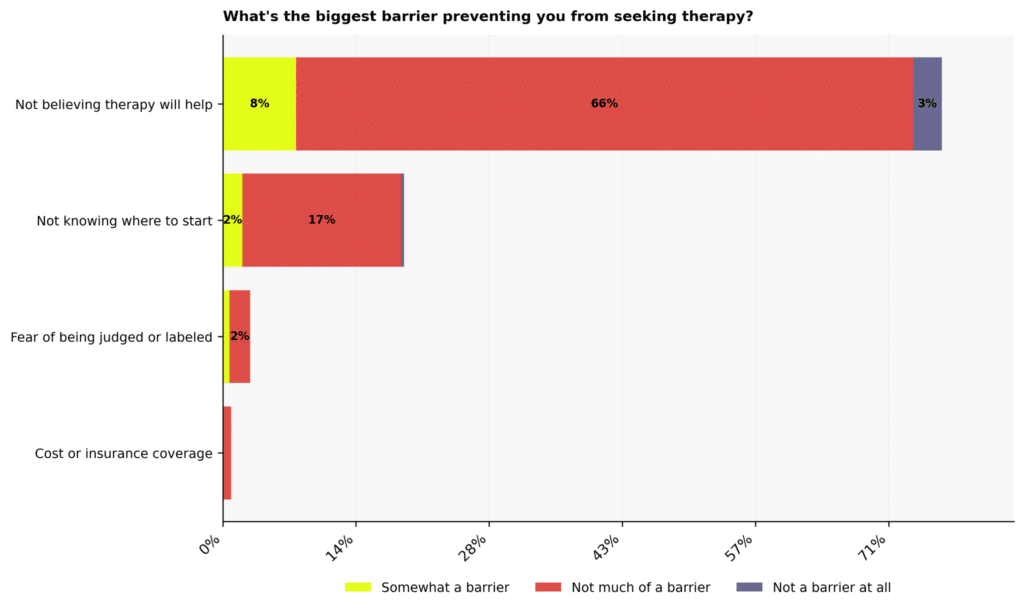
Many assumptions are made about why people experiencing narcissism don’t seek therapy. However, the reality is more complex, and some commonly cited barriers are less significant than others.
Our audience suggests that not believing therapy will help isn’t a significant barrier for most people with NPD. According to 66%, this issue isn’t much of a barrier, while it’s not a challenge at all for 3%. Only 8% consider it somewhat of a barrier, indicating that confidence in therapy is generally higher than expected.
Although 17% agree that knowing where to begin isn’t much of a barrier, 2% still identify it as somewhat of a challenge.
Fear of being labeled or judged appears to have only a limited influence, with 2% of people with NPD describing it as not much of a barrier and less than 1% feeling that it’s somewhat one. Cost or insurance coverage also doesn’t play much of a role, with the same less than 1% stating that it’s not much of a barrier.
It looks like improving access to information about therapy for people experiencing NPD is just as important as the therapy itself. Making the process easier to understand may encourage more people to seek professional help.
What are people experiencing narcissism’s biggest fear of starting therapy?
For 68% of people experiencing narcissism, the biggest fear about starting therapy is that it won’t work for them, yet 22% are not really concerned about this, and 1% don’t fear this at all; the remaining 7% have very real concerns about being judged or labeled
Fear is focused in one main place:
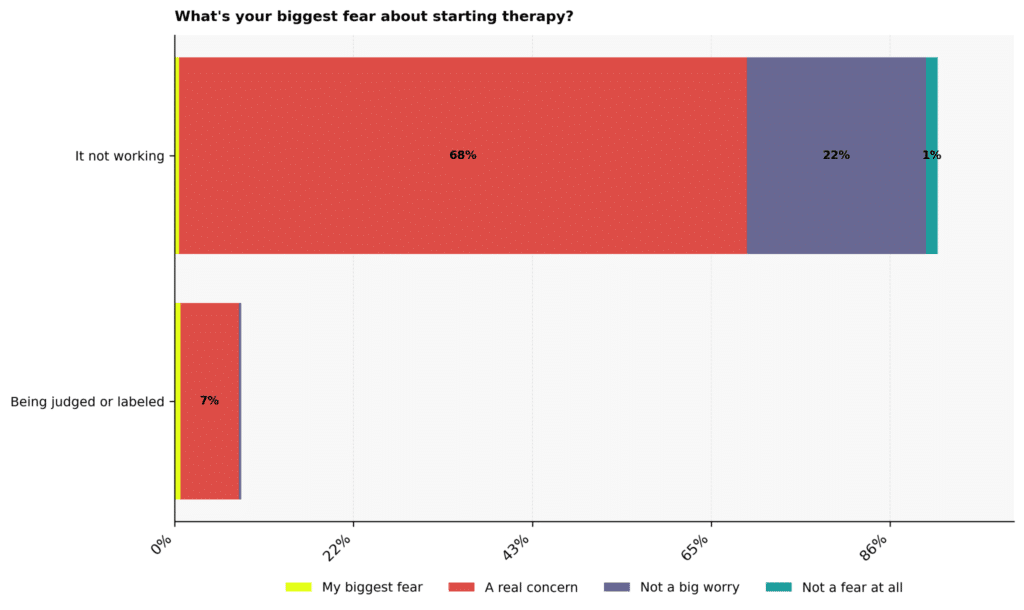
In the US, between 50% and 75% of narcissistic personality disorder cases affect males. Historically, men have shied away from seeking therapy due to traditional gender socialization. Societal pressures to be “stoic,” self-reliant, and avoid asking for help can make therapy feel shameful or unmanly. While this stigma is largely overturned, some people still worry about being judged. And this applies to men and women.
Amongst our audience of people experiencing narcissism, 7% have real concerns about being judged or labeled, which is fortunately the minority. However, 68% have a very real concern about starting therapy and finding that it does not work for them. A smaller number (22%) don’t find this a big worry, and just 1% don’t fear this at all.
What type of therapy interests people experiencing narcissism most?
12% of people experiencing narcissism are most interested in CBT, and 23% think it’s worth considering, but it’s not a first choice for 17%, and 11% are not interested in this type of therapy, while psychodynamic therapy is not a first choice for a further 1%, and 34% are not sure or are open to recommendations
Therapy preferences are varied:
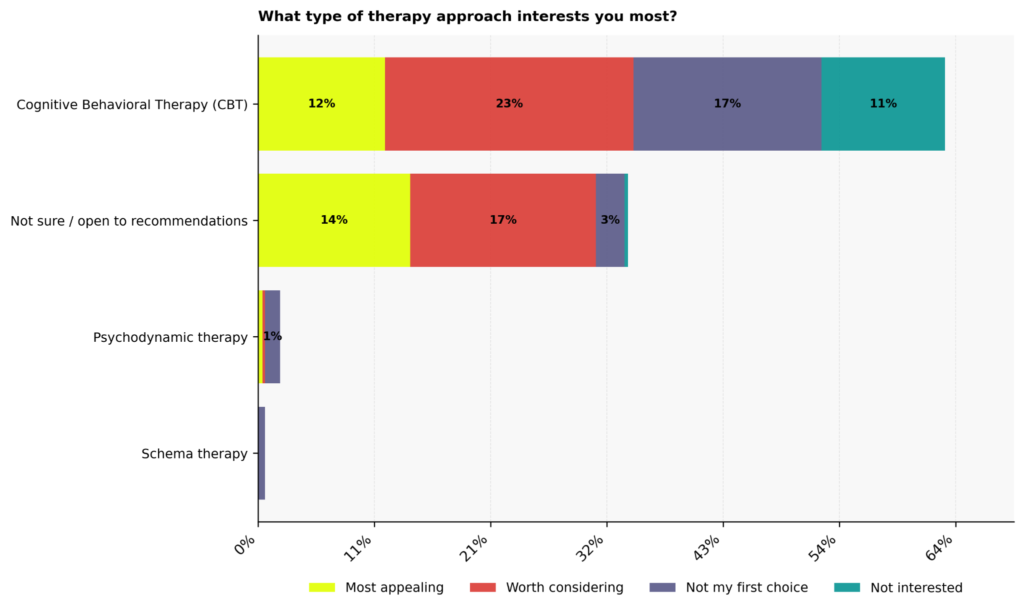
There are more than 400 types of psychotherapy, but they generally fall into five main categories: cognitive behavioral therapy (CBT), psychodynamic, humanistic, behavioral, and holistic or integrative therapy. Each one takes a different therapeutic approach, and every type doesn’t equally appeal (or work) for everyone.
Our audience of people experiencing narcissism shows the strongest interest in CBT, with 23% considering it worth trying and 12% identifying it as the most appealing option. By comparison, it wouldn’t be the first selection for 17%, and 11% aren’t interested in it at all, highlighting that, although CBT appeals to many, it isn’t universally preferred.
14% are not sure/open to recommendations, citing this option as the most accurate description of their attitudes, and 17% feel that this approach is worth considering. For 3%, this isn’t their first choice, and less than 1% are not interested in this view at all.
Psychodynamic and schema therapy generate comparatively little enthusiasm, with less than 1% considering the former most appealing and 1% saying it’s not the first path they’d pick. Less than 1% state that the latter isn’t their top option.
These numbers reinforce the importance of tailoring treatment to each individual rather than adopting a one-size-fits-all strategy.
Do people experiencing narcissism prefer individual or couples therapy?
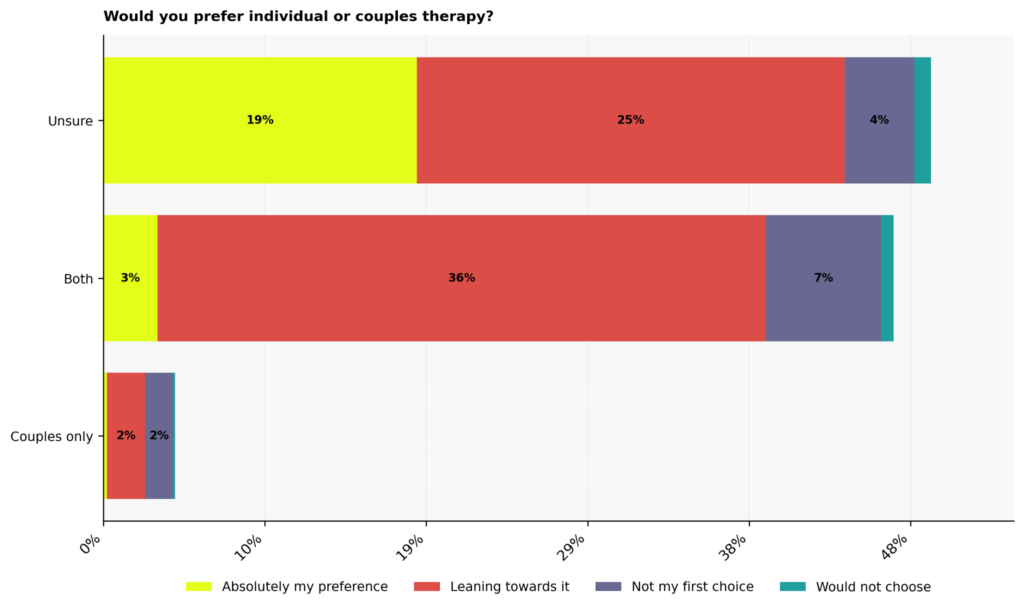
36% of people experiencing narcissism lean towards both couples and individual therapy; this doubling up is absolutely the top preference for 3%, but not a first choice for 7%, 2% lean towards couples only therapy, but it’s not the first pick for another 2%, and 48% are unsure of their preferences.
Shared or individual sessions raise opinions:
Both individual and couples therapy are important when treating mental health conditions like NPD, but they address different needs. The most appropriate approach depends on specific circumstances, treatment goals, and the issues that will be worked through.
Our audience indicates that many people experiencing narcissism aren’t ready to commit to a single type of therapy. 25% lean toward being unsure about which approach they’d prefer, and a further 19% identify uncertainty as their preferred attitude to this idea. 4% wouldn’t say that “unsure” would be their first choice when describing their take, and less than 1% feel that this option doesn’t describe their mindset.
Amongst people with NPD who have expressed a clearer preference, combining both individual and couples therapy appears to be more appealing than attending the latter alone. While 36% lean towards using both types of therapy and 3% identify this option as their strongest preference, it would be the first choice for only 7%. Less than 1% would not choose this path.
Fewer than 1% of our audience state that couples’ therapy alone would absolutely be their preference, 2% lean towards it, and another 2% say this isn’t their preferred approach. Less than 1% are not interested in it at all.
Rather than viewing personal and relationship challenges as separate issues, many people experiencing narcissism appear to be open to addressing both simultaneously. This reflects an awareness in people with NPD that changes in one area can impact the other.
Would people experiencing narcissism be interested in virtual therapy sessions?
89% of people experiencing narcissism are not really interested in in-person only therapy, and just 3% are somewhat, while 4% are not really interested in virtual therapy, and 2% are unsure about whether they would be interested in virtual therapy sessions.
Virtual takes precedence over in-person sessions:
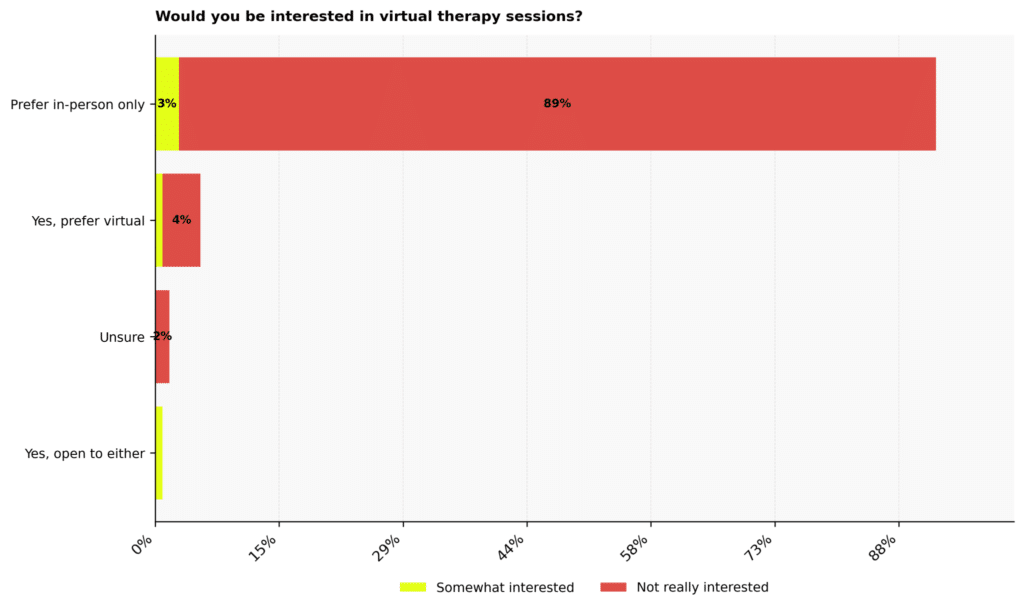
The number of Americans who would use telehealth services for mental healthcare rose from 49% in 2020 to 59% in 2021, and it’s clear that virtual consultations are also preferred by our audience.
A whopping 89% of people experiencing narcissism are not really interested in in-person only therapy sessions, while just 3% are somewhat interested, compared to the 4% who are not really interested in virtual sessions. 2% are unsure, and there were no real conversations recorded about those who are open to either virtual or in-person therapy.
How important is privacy in choosing a therapist for people experiencing narcissism?
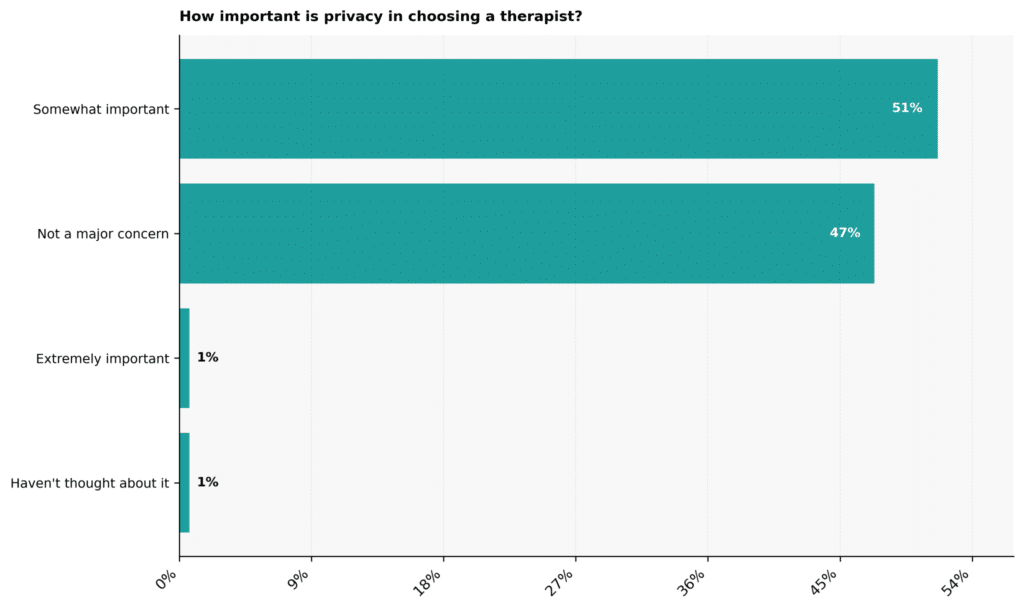
Privacy in choosing a therapist may be somewhat important to 51% of people experiencing narcissism and extremely important to 1%, but it’s not a major concern for 47%, and 1% haven’t thought about it
Privacy concerns are divided:
Privacy is an important part of the therapeutic relationship. Feeling confident that personal emotions, experiences, and thoughts will remain confidential makes it easier to speak openly, creating the trust needed for therapy to be effective.
Interestingly, people experiencing NPD place less emphasis on privacy. While 51% see it as somewhat important, a noteworthy 47% feel that it isn’t a major concern. Only 1% view it as critical, and a further 1% haven’t even thought about it.
Perspectives are concentrated around two more moderate positions rather than the extremes. This indicates that attitudes toward privacy are more balanced than polarized, with relatively few people with NPD viewing it as either critical or something they’ve never considered.
What would make people experiencing narcissism trust a therapist?
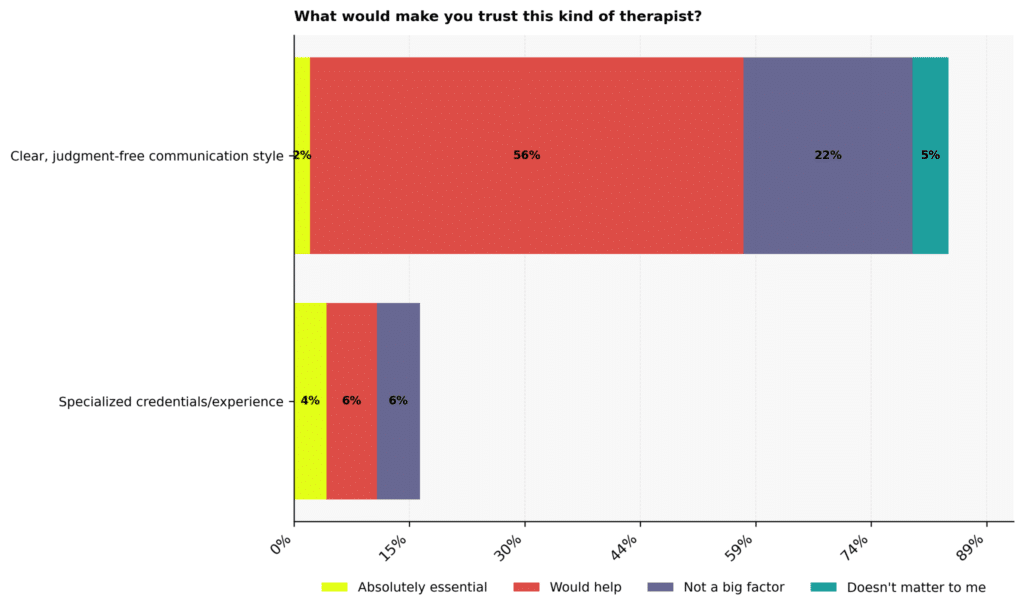
A clear, judgement-free communication style would help 56% of people experiencing narcissism trust a therapist specializing in this disorder, 2% think this is absolutely essential for building trust, but it’s not a big factor for 22%, and it doesn’t matter to 5%, while specialized credentials or experience are absolutely essential for 4%, would help 6% trust a therapist, and are not a big factor for the remaining 6%
Trust signals center on communication style:
Trusting a therapist who specializes in treating narcissistic personality disorder is crucial for anyone seeking treatment. There are two core reasons why our audience would put their trust in one.
The first is if the therapist has a clear, judgment-free communication style. This is absolutely essential for 2% of people experiencing narcissism, and it would help 56%. However, 22% agree that this isn’t a big factor in inspiring trust, and it doesn’t matter to 5%, showing that not everyone requires this communication style.
The second trust factor is specialized credentials and experience. This accounts for a smaller group, with 4% citing it as absolutely essential and 6% agreeing it would help establish trust in a therapist. However, it’s not a big factor for 4%, as they clearly look for other signals.
What’s the current payment plan for therapy among people experiencing narcissism?
32% of people experiencing narcissism are unsure of what is covered by their insurance for therapy, and 46% somewhat fit into this category too, 10% have insurance that covers their therapy, and 12% don’t really have to pay out of pocket for sessions
Therapy payment is not a major sticking point:
Paying for therapy in the USA isn’t always straightforward. While session fees usually range from between $100 and $200, the amount that people experiencing narcissism actually pay depends hugely on their particular coverage and the provider.
32% of our audience is unsure of exactly what is covered, and 46% feel this somewhat describes their current payment situation. For 12%, planning to pay out of pocket isn’t really true in their case, while 10% have insurance that definitely covers their therapy.
This suggests that financial planning for therapy is not high on the agenda, and that the uncertainty about it is neither a help nor a hindrance.
Have people experiencing narcissism used AI chatbots to explore these traits?
4% of people experiencing narcissism have tried using AI chatbots to explore these traits a few times, 1% have done so regularly, but 5% are curious but hesitant in this regard, while 26% have tried it but prefer human support, and 2% absolutely agree with this, and 64% have not tried it but are curious, but 6% already know it’s not for them
AI therapy chatbots are not hugely popular:
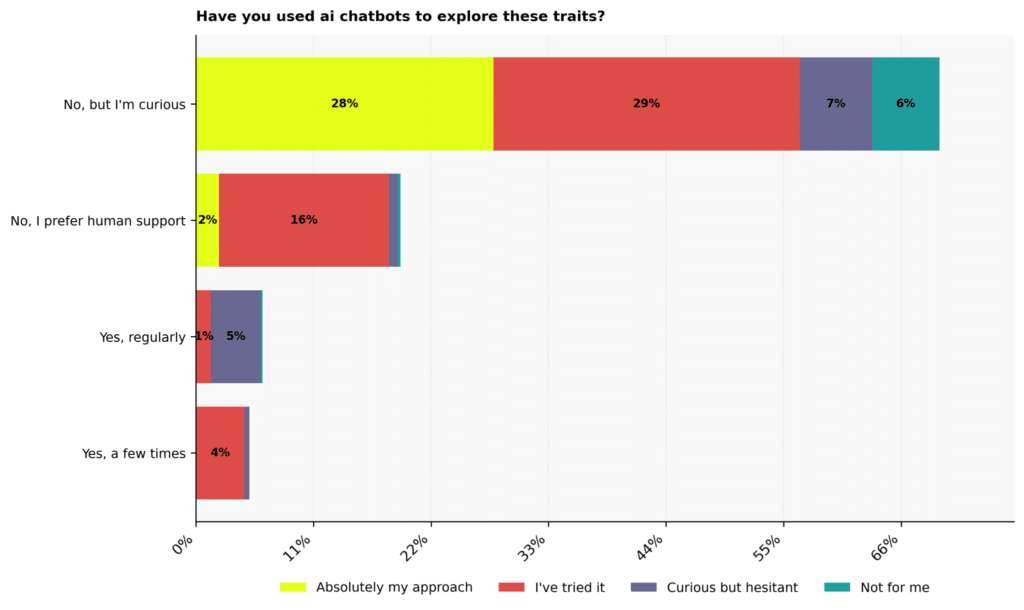
Recent surveys show that around one in five young people in the US use chatbots for mental health advice. For people experiencing narcissism, 4% have tried AI chatbots to explore narcissistic traits a few times, 1% do so regularly, while another 5% are curious to do so, but are hesitant.
Those who have not explored narcissistic traits using AI chatbots make up the bigger share, with 28% agreeing they have not done so but are curious, 29% are curious and have tried it, while 7% are curious but hesitant. Just 6% say it’s not for them and they aren’t curious, while 2% absolutely prefer human support, and 16% have tried AI but still prefer a human over technology.
Overall, it’s clear that AI is becoming an increasingly common way to learn about mental health, but its role in helping people explore their own narcissistic traits is still evolving.
How likely are people experiencing narcissism to book a consultation soon?
64% of people experiencing narcissism are just searching for a therapist for now and are not about to book a consultation, 12% are unlikely to book a session soon, but 12% are somewhat likely, and another 12% are very likely to do so.
Bookings now are still tentative:
People experiencing narcissism don’t all move to therapy at the same pace. While some are ready to arrange a consultation right now, this isn’t the case across the board.
64% of our audience is just searching for now, and it’s unlikely that 12% will book a session at this point. 12% feel that it’s very likely that they will, and a further 12% say that this is somewhat likely.
The prominence of people researching highlights an opportunity for mental health professionals to answer questions and address uncertainties before the first appointment is ever booked by people with NPD.
A positive outlook for therapy and personal growth
Overall, these findings show that while people experiencing narcissism face unique challenges around self-awareness, relationships, and seeking support, many remain open to personal growth and meaningful change. Therapy offers a structured, judgment-free environment to better understand behavior patterns, build healthier relationships, and develop lasting coping strategies.
As awareness of narcissistic personality disorder continues to grow, professional support can help individuals move beyond setbacks, strengthen emotional well-being, and create positive change for themselves and those around them.
About the data
Sourced using Artios from an independent sample of 1,604,832 opinions of people experiencing narcissism in the USA across X, Quora, Reddit, Bluesky, TikTok, and Threads. Responses are collected within a 95% confidence interval and 5% margin of error. Results are derived from what people describe online, from opinions expressed, and not actual questions answered by those in the sample.
Continue the Journey
If you or your loved one is in need of support, contact us today and take the first step toward understanding, growth, and emotional balance.
For further insights and support, explore: The Narcissism Decoder Podcast: get a deeper understanding through expert discussions and real-life stories. These resources can provide additional guidance as you navigate your journey toward healing and personal growth.
Dr. Anthony Mazzella is a psychoanalyst and psychodynamic psychotherapist specializing in narcissism, personality disorders, and relational dynamics.

